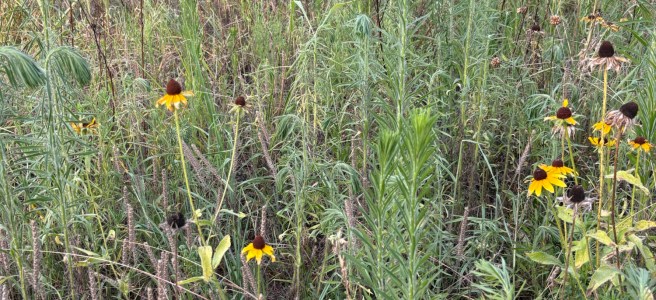
They were the plants of abandoned fields. If you stopped to look you’d notice they populated roadsides. Freight as it swept the country swayed them in numbers where they stood thick along railroad tracks. These plants were not picky. Any pasture would do. They were at home in idle fields, they could make camp along the mouths of woods. Some were capable of forming impenetrable thickets from the root sprouts of mother plants. These plants had funny names from older times. Goatweed, ragweed, hogweed, horse nettle, mare’s tail, snakeroot, burnweed, sow’s thistle, buckbrush, ironweed, Spanish needles, dogbane, henbit, bindweed, nightshade, lambsquarters, fountaingrass, ladysthumb, foxtail, dogfennel, knotweed, morning glory, butterweed, meadow garlic, panic grass, coralberry, farkleberry. They could be happy in a dry ditch, a farmyard, overgrazed pasture, wasteplaces, rights of way, fencerows, orchards, river banks, glades, bluffs, rocky woods. If not arrested, patches of these plants would overtake any available area. They had allelopathic properties, which is a nice way of saying they waged war on other plants, on each other. They were considered undesirable. To those desperate enough to taste them, they proved bitter and toxic. They dropped burs, brandished thorns, refused to release from the ground. When handled they bristled with dense stellate hairs that irritated one’s eyes. They were unpalatable even to cattle. They made their way into our milk, they killed a president’s mother. They rooted at the node, they toothed at the margin, they had lobes that clasped at the stem.
*This poem was originally published by Paperbark in 2022.
Discover more from JBR.com
Subscribe to get the latest posts sent to your email.

