Exfoliant

I was a motheater, loved
Bugs and other caterpillars.
I planted a bunch of
Pills but none of them
Grew.  I sought transit across
A star, pinprick on its
Glaring tongue.

After I suggested baking soda
You used instead my cologne
To wash your hair.  We
Traded old photos from the fridge
For blue skies reflected on future lakes.

Querido,
If when my
Brow no longer rises
Like milk
In steepest tea

Unbarb the wire,
Steady the skreeking gate,
Prescribe my final burn.

Frozen Laptop, Frozen Pizza: Assessing the Early Days of the Coronavirus Lockdown

The weather forecasts are wonk.  Something to do with a sharp decrease in the number of airplanes in the air.  It wasn’t forecast to rain today.  But it has rained, and not just a few drops.  My wife and I console each other with talk of silver linings.  The air quality is improving, just ask the stars.  

Here in St. Louis, as March slogs on, the rain has been a cloying companion during days of isolation.  I can’t recall going on a walk when I didn’t have to watch out for puddles and dreck as the dog Hugo and I walked in our desultory fashion, neither one of us leading the way.  This month hasn’t been atypical in its raininess but I suspect the total rainfall is at the upper end of its historical range.

If only weather were the wackiest aspect of March 2020.... 


The essay continues...

Get Your Fix at Heman Park

If, like me, you’re starting to climb the walls during this coronavirus lockdown, you’re also asking yourself: what can I do, within these newly instituted, claustrophobic confines that doesn’t run afoul of the Stay-at-Home order?  How can I look after my own mental health, the quality of which has for years depended on being able to locate myself as needed in wide, open spaces?

Under the Order, residents of the county are still allowed to go for a walk in public parks.  Indeed, the County Executive has urged operators of public parks—presumably he is speaking to municipalities such as my own, University City—to keep their parks open.  To console myself, I think about all of the county’s various parks remaining open. Whether it has been for the purpose of playing disc golf, going for a run, or taking my dog Hugo for a walk, I have spent a lot of time in the parks of University City and St. Louis County over the past decade.  One of the parks nearest to me, which I have come to appreciate despite its faults, is University City’s Heman Park.


Continue with this essay about Heman Park...

Washing Over

He was in town.  Town’s good. Even though the road between us gurgles like a heavy humidifier.  “He wasn’t in town with you?” Memory, there’s a clue. I loved him then, even though I knew better.  I loved him more, even more than the weather. Gravity fails us all. Our senses are stuck to the wall.  What came first wasn’t even a letter.  

In blue cramped spaces Mother gives birth with no assistance.  The child immediately dreams of a blockchain tomorrow. Serrated rain falls like hurricane pills rejected by heaven.  He said he could’ve washed over and by now I guess he has. If only we all just fell like the rain. Or with it. Or because of it.  

Earliest morning.  A train calls in the distance.  Dim light reflects off water. The sound of geese in the sunrise of our tangled hair.


Look Here, Boys: The Calamitous Fall of One of Farm’s First Owners.

I don’t know when or why the marriage of Milford to Stella Burns collapsed. 

But knowing so gave me reason to view the life of Milford Duncan with a certain wariness.  His marriage to Stella was finished by 1919 at the latest. This I know for sure because in early November of 1919 Milford was married for the third time, to Ella Noblett (b. 1881, location unknown). 

Ella Noblett herself had previously been married; she widowed a man named Coates, an Englishman who was closely associated with the rise of Maries Bank. Said to be a shrewd businessman, he also had a hotel operation in Vienna. When he died in 1917 from influenza, he was said to be worth rather a lot of money...


The Story of Milford Duncan...

I Don’t Know What It Is About A Field—Part Two

Left Tucumcari, New Mexico at 8:40. The woman at the Best Western when I checked out says, "You look like you could use more sleep." Oh, thanks! What a nice thing for you to say. Yeah, I could have used some more sleep. But other guests stirring early, doors clanging, and then someone freaking out when a cat jumped out of the hallway trash can meant it was time for me to get out of bed. That and needing to drive another eight hours today.

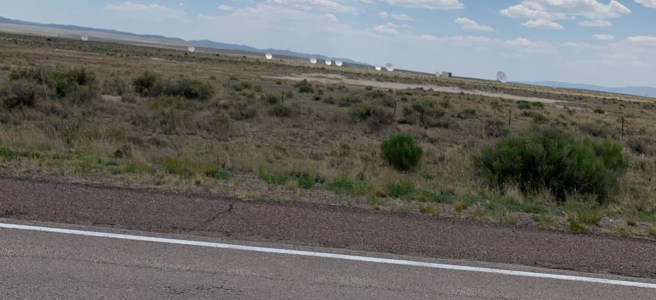
I'm on U.S. Highway 54 headed east. This highway takes me all the way to Wichita. Land is mostly flat. Ranch land. Cattle grazing. Mesas in the distance, to the west. Lots of Aermotors. I've realized that's a trademarked name for the old-style windmills.

Lots of empty buildings here. There were lots of them in Tucumcari, too. That town is hollowed out. Abandoned homes. I suppose Tucumcari had its day. Post World War II. Car culture. Route 66. Before passenger air travel proliferated...


The second and final part of the travelogue continues here...

I Don’t Know What It Is About A Field

In eastern Butler County the fields opened up, took on the wispy gold of uncut hay. Not long after that hills appeared. I could see the outcome of geological events, the hint of a rock facade where the road cut through. But the grass didn't mind the hills and it ran long and uncut up and down the slopes still. A valley appeared, a vantage, a vista. I thought of some of that scene from Dances With Wolves where they creep up to a crest and look down to see a herd of buffalo grazing in peace.

It would've been a good place to stop but I was going 75 and I was only an hour into the drive. It's a spot to think about, for another. A spot worth reaching over into the glove compartment and pulling out this notebook for, an emergency notebook, never been written in before, the two notebooks I did bring secure in my bag.

I'm east of Wichita, KS on U.S. Highway 54, where Butler County ends and Greenwood County begins. Hay, cow ponds, the cattle so dark against the golden light of the field, dark against the blue of the sky, against the shapely hills.

FDR had some sort of windbreak tree-planting program. A shelterbelt. I never gave much thought to windbreaks, to trees as a line against the wind. This tree I keep seeing, that is so prevalent, must have been one of the trees of choice for the shelterbelt planting. It's often got a lopsided crown and most of the time its trunk splits into two not far from the ground, a couple of feet, maybe less. This tree, whatever it is, is not at Farm. It's a Dust Bowl thing. Kansas, Oklahoma, the Texas panhandle, northeastern New Mexico.


Continue with Part One of this travelogue...

2019, Year Of…

Year of the dumpster, beached on the street like a malevolent whale.  Year of the winking stop sign, of constantly yellow lights. 2019, year of the home run, of rain, of record heat, of polar vortex.  Year of the tweetstorm. Of walls and rejections. Year of running water, of family, of learning another language, of learning how not to take things for granted.  Year of choking to death on vomit in a hotel room, year of death of talent by suicide.

Year of unchecked mergers. Year of the podcast, of restaurants closing, of buildings that will be empty until they collapse. Year of body rags cut from old clothes, of rubbing alcohol, of witch hazel.  Year of CBD. Of bird versus bunny, year of more and more mass shootings and no one doing anything about it.

Year of groggy mornings, of bags under my eyes, of sleeping by myself, of writing poems, of hiding.  Year of swimming laps, of AirBnB, of appreciating a picnic table in the shade in the park. Year of compound interest, of Jupiter and Scorpius, of the opossum, of the narwhal tusk, of the whip-poor-will's song.  Year of playing tennis again with my brother. Year of cuñado, year of farmer’s markets. Year of next year, if I’m lucky, again...

To continue with 2019...